Salkantay Trek: Difficulty, Altitude and Tips
The Salkantay Trek takes you from the Cusco region to Machu Picchu in 4 or 5 days on foot. It runs beneath Salkantay, a 6,271 m (20,574 ft) peak, crosses a pass at around 4,600 m (15,090 ft), then drops into the cloud forest all the way to Aguas Calientes. It is the best-known alternative to the Inca Trail: higher, wilder, and with no permit to book months in advance.
The route day by day
The classic version takes 5 days. Here are the main stages, with the altitudes from our own itinerary.
Day 1: Mollepata to Soraypampa and Humantay Lake
An early start from Cusco to Mollepata, then on to Marcoccasa (3,300 m), where the hike begins. Allow about 7 hours to reach the Soraypampa campsite (3,800 m), with your first views of the glacier. In the afternoon, you hike up to Humantay Lake, a turquoise lake at the foot of the ice, before heading back down to camp.
Day 2: Salkantay Pass
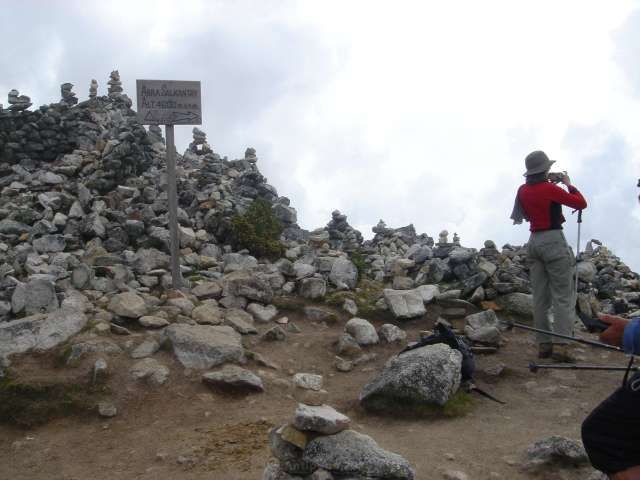
The toughest day: an 800 m climb to the pass at around 4,600 m, followed by a 1,700 m descent to the Challhuay camp (2,900 m). Expect about 9 hours of walking. In a single day you go from high mountains to the first cloud forest.
Day 3: down to La Playa
A downhill stage of about 6 hours through coffee, citrus and coca plantations. It gets noticeably warmer. Camp is at La Playa (2,100 m), near the Santa Teresa River.
Day 4: Llactapata and Aguas Calientes
A climb along an old Inca path to the Llactapata ruins (2,590 m), where you can see Machu Picchu on a clear day. Then down to Hidroeléctrica and about 3 hours along the railway to Aguas Calientes. The day takes around 8 hours in total. Depending on how you feel, your guide can shorten the stage or put you on the train.
Day 5: Machu Picchu
Guided tour of the citadel in the morning, then train and bus back to Cusco.
How hard is the Salkantay Trek?
You need to be fit, but the trek is not technical: there is no climbing involved. What makes it demanding is the altitude and the length of the days, 6 to 9 hours of walking. We rate it 2 out of 3 for difficulty. If you hike regularly in the mountains at home, you are ready.
Elevation gain
On the 5-day version, expect around 2,250 m of ascent and 3,400 m of descent in total, not counting the Humantay Lake side trip. The long descents are hard on the knees, so trekking poles are a good idea.
Altitude and acclimatization
The high point is the pass at around 4,600 m, and the first night is already at 3,800 m. Plan at least two or three nights in Cusco (3,400 m) or the Sacred Valley before you start. It is the best way to avoid altitude sickness.
When is the best time to hike the Salkantay Trek?
The best time is April to November. From May to September, in the heart of the dry season, skies are clear and rain is rare, but nights at altitude are very cold, often below freezing at the first camp. In April, October and November a few showers are possible, but the trek is still very doable. December to March is the rainy season: the trek stays open, but trails get muddy and clouds often hide the peaks. Unlike the Inca Trail, Salkantay does not close in February.
Salkantay or the Inca Trail?
The Inca Trail follows a historic route lined with archaeological sites and reaches Machu Picchu through the Sun Gate. Permits are limited and often sell out months ahead. Salkantay needs no permit: you only have to book your Machu Picchu entrance ticket. It goes higher, crosses more varied scenery from glacier to jungle, and sees fewer hikers. On the other hand, you pass fewer Inca ruins along the way.
If walking in the footsteps of the Incas is what you are after and you can book early, go for the Inca Trail. If you are planning at short notice or mainly want big mountain landscapes, Salkantay is the better fit.
How much does the Salkantay Trek cost?
For our 5-day version, expect between US$600 and US$1,000 per person, based on two travelers. The price depends on group size, campsite comfort and the option you choose. Your quote lists exactly what is included.
What to pack
Mules carry most of the gear. In your daypack, bring warm layers and a windproof jacket for the pass, a rain poncho, sunscreen, sunglasses, a water bottle, snacks, and insect repellent for days 3 and 4. A sleeping bag rated for below-freezing nights is a must. See our full list of what to bring on a trek in Peru.
Other treks to Machu Picchu
The Lares Trek is shorter and easier, and passes through Andean villages home to Quechua communities. The Choquequirao Trek is harder and leads to an Inca city that still sees few visitors. Both can be combined with a visit to Machu Picchu.
Take a look at our 5-day Salkantay Trek and ask us for a tailor-made quote.


